
OI 013 · · 25 min
Building Solana's Liquid Staking Layer: FP Lee on Sanctum, Buybacks and Playing the Long Game
Co-founder and CEO · Sanctum
Why liquid staking on Solana is not a winner-take-all game, white-label LSTs, counter-cyclical buybacks and running Sanctum on unit economics.
Watch the conversation
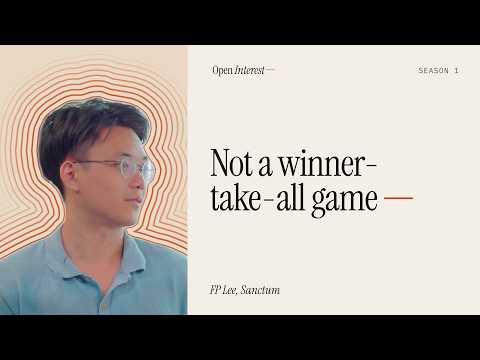
15:15FP Lee“Buybacks are a capital allocation decision, they should be made in a considered and discretionary manner.”
Full conversation
- Intro: FP, Sanctum
- Friends from school, university and the army
- Why the co-founders stuck together
- LSTs as a service: 100+ branded LSTs, one liquidity layer
- How Sanctum became number one on Solana
- Where liquid staking is heading, and institutions
- Why Solana
- Institutions go from questions to signing
- The token rebrand
- Token design versus building the business
- Buybacks: discretionary and counter-cyclical
- Running Sanctum as a profitable business
- One small bet and one big bet a year
- Sanctum App 2.0 for long-term investors
- Core memories: luck and not giving up
- Close
- Guest
- FP LeeCo-founder and CEO, Sanctum (at the time of recording)
- Host
- Josh Han
- Recorded
- TOKEN2049, Singapore, released
- Topics
- Liquid staking
In this conversation
FP Lee, co-founder and CEO of Sanctum, tells Josh Han how four friends from school, university and the army turned a 2021 side project (then Socean) into the largest liquid staking infrastructure on Solana. He explains Sanctum's 'LST as a service' model — more than 100 branded liquid staking tokens sharing one liquidity layer, which Solana's stake accounts make possible — why institutions now arrive ready to sign, why he thinks buybacks should be discretionary and counter-cyclical, how Sanctum runs as a profitable business rather than a narrative, and the new Sanctum App 2.0 for long-term investors.
Questions discussed
How did Sanctum start, and why did the team survive the 2022 bear market?
FP says the four co-founders are friends from high school, university and the army who began in 2021 expecting a side project, raised in the bull market and then endured two years of pain. He credits trust between co-founders — decisions made together, mistakes owned together — and simply not giving up.
How is Sanctum different from Lido?
Lido has one staked token; Sanctum has over 100. Partners such as Jupiter, Bybit, Crypto.com and Forward Industries issue white-label LSTs while Sanctum runs the infrastructure and a unified liquidity layer, so every branded LST plugs into the same pool.
Why is liquid staking on Solana not winner-take-all?
The received wisdom from Ethereum was that one LST would win. FP says a technical detail of Solana's stake accounts makes that untrue and allowed a universal liquidity layer; big protocols with better distribution than Sanctum issue the tokens, users get yield, and everyone wins together.
Where is liquid staking heading as institutions arrive?
FP thinks all SOL should be liquid staked: plain staking is not composable and has a liquidity penalty. He is seeing regulated institutions and public companies — Solana DATs — embrace LSTs, and after KBW the conversations have shifted from 'tell me about staking' to 'when can we sign'.
Why keep building on Solana?
Picked five or six years ago because it was fast and cheap (and written in Rust), Solana has since become faster, cheaper and richer, FP says; he praises the Solana Foundation as aggressive, good stewards, and sees Solana becoming the default choice for institutions tokenising assets.
How should a token relate to the business, and what about buybacks?
FP argues founders focus too much on the token and not enough on building a sustainable, profitable business; in the short term the market is a voting machine, in the long term a weighing machine. He likes buybacks but calls them a capital allocation decision to be made in a considered, discretionary and counter-cyclical way, not programmatically.
How does Sanctum run its balance sheet, and what is the next bet?
Sanctum has not raised from private investors since 2021, turned profitable last year, and reinvests cash flow into building or buying the next business with good moats — one small bet and one big bet a year. The current big bet is Sanctum App 2.0, a consumer app for investors who want to buy and hold good assets for the long term rather than trade.
In their words
“Buybacks are a capital allocation decision, they should be made in a considered and discretionary manner.”
“In the short term, the market is a voting machine. It's often a lot of narrative driven stuff, but in the long term, it's a weighing machine.”
Quotes follow the on-screen captions of the released edit; filler words (um, uh, like) removed and omissions marked with an ellipsis.
Transcript
Machine-transcribed from the released edit and lightly edited; names, companies and figures were checked against the on-screen captions, but the text has not been reviewed line by line and may contain errors. Speaker labels are automatic. When in doubt, the video is the record. Timestamps link to the video. Download (.vtt)
Read the transcript (4,528 words)
Josh Han Hello and welcome back to the content suite in Singapore. Today, I have the co-founder of Sanctum, the number one TVL protocol on Solana and FP. Before we get started and talking about Sanctum, FP, do you want to introduce yourself?
FP Lee Yeah, so I'm FP. I'm the co-founder and CEO of Sanctum. Sanctum has been around for over five years now. We just celebrated our five-year anniversary. We used to be called video liquid staking on Solana.
Josh Han A little bit of context between our relationship. I met FP probably around 2020, 2021. He and the team at Sanctum I believe are one of the most resilient teams I've personally met and invested in from going all the Whole rebrand. Do you want to dig a little bit deeper into how you met your teammates and the story of how you guys got here?
FP Lee Yeah, sure. Thanks for the kind words. We actually are all friends from high school, university and army. We all got together as a bunch and we thought we would just be doing a side project and then we didn't expect it to Go out of control as it were. Obviously, when we started, it was 2021. It was a very heady time, so to speak. We were lucky to raise at a bull market and then afterwards, it was like two years of pain in 2022, starting with the Ukraine War and then Three Arrows and Celsius and FTX and all this stuff. So that was pretty painful, but we didn't give up and then we kept going.
FP Lee So now we're here and we've been five years in and I hope to have another more five years ahead.
Josh Han Yeah, I mean, talking a little bit about war stories from FTX and all the things before, what do you think it is about you And your co-founders that gives you guys the resilience and the ability to continue from the same team base?
FP Lee I guess maybe the first says that we are not too smart. We don't, you know, maybe if you are too good, you have lots of options. No, I'm joking. I think there is the number one reason that companies fail is co-founders are breaking up. They no longer trust each other to do their best work or they fundamentally disagree. And of course, we have our fair share of disagreements or approach, but by and large, I think we have a very strong appreciation for Everyone's skill sets. There are four of us, which is, I guess, not typical, But, you know, yeah, we make decisions. I am sort of technically the co-founder and CEO, but really a lot of the decisions we always run by each other before we Make these decisions.
FP Lee And so, you know, there's a lot of trust. And then also, when we fuck up, which happens all the time, right, at least it's not a, you know, it's a we made this Decision together and, you know, we are all learning it from it. Yeah, but, you know, each of us have a very different skill set. And then we just trust each other to execute. But at the same time, we're also very collaborative with how we make decisions and assign responsibilities.
Josh Han Yeah, I think that trust has obviously led you guys to a lot of success today. Maybe talk a little bit about where you guys are currently positioned in the market with your guys's LST and current product line. Yeah.
FP Lee So Sanctum's core business is we do liquid staking on Solana. And this is when we say liquid staking on Solana, people always misunderstand. They think we're like Lido or something. And actually Sanctum's model is actually uniquely different from Lido's model. So Lido, for example, has one stake token, stETH. We actually have over 100. We do something called LST as a service. We work with partners, protocols, exchangers, so like Jupiter, Bybit, Jupiter.com. And then that's also like Forward Industries, the FDB, to issue sort of white label LSTs. And so if you are someone who holds Solana on behalf of your clients or have users that hold SOL, you're able to build like A white label liquid staking token and then Sanctum handles sort of all the infrastructure around that.
FP Lee And all you need to do is for someone to hold your token and then you earn money from it. So that's a very different operating model. And the reason we're able to do such a thing is because we've built something on Solana that's a unified liquidity layer. So even though these are all technically different LSTs, they actually all plug into the same liquidity pool, which is obviously very important for liquid Staking token to be liquid. And so this combination of distributed or decentralized distribution of LSTs to partner with a kind of unified and universal liquidity layer allows us to Get the best of both worlds. And so this is a quite an innovative model, which we haven't seen before. And now that we've done it on Solana, we've seen other chains.
FP Lee Yeah, people are the chains adopted.
Josh Han It's very different fundamentally, because now everyone gets to have their own branded LST. And it's a B2B type model. Tell me a little bit about how you guys came to be number one through these co branded models. Was there specific moments in the timeline that really increase TVL or like, right, spark something new?
FP Lee So I, I think people are, you know, we as humans were always reaching for mono causal explanations of things. And you know, that's, that's like, it makes sense, right. But in reality, kind of, You know, life is always a little bit more complicated than that. We had one key insight, which is that we, it was actually possible to build this sort of universal liquidity layer, that was simply not The received wisdom. I remember when we were raising people like, well, how are you going to be number one LST is how winner takes all and this And that. And that was very much the received wisdom, because that's the case on Ethereum. But on Solana, it's different, right? There is just one key technical detail on about the Solana chain, about stake accounts of Solana, that makes that not, not the case.
FP Lee And this little one fact sort of has all sorts of downstream implications, which then sort of allowed us to build this very unique model. And so yes, we were lucky to sort of like, hit upon this insight and, you know, develop upon it and not give up along The way. I also have to give a big thank you to our partners as well, right, because, You know, all these big protocols, they have better distribution than Sanctum ever does, right. And so we're able to solve borrow their distribution and, you know, build it into a win-win situation where they win because they make Funds and their users get yield. And then we also take our cut. So it's, yeah, this is a, I like this because we all win together. Right.
Josh Han That makes a lot of sense. I've seen the co-branded, whether that's Jupiter Soul being able to be deposited within their money market for different perp exchanges. So it's really a win-win scenario. Tell me a little bit more about the current landscape and state of liquid staking we are and how you see this industry moving with Solana kind of entering this new chapter of like capital markets. Yeah.
FP Lee So we do see kind of, so I think that all Solana should be just liquid staked. I think it's very clear that liquid staking, it just gives you like all the advantage.
Josh Han It's kind of like the holy grail.
FP Lee It's like how it should have been all along. Right. In my opinion, because like staking, you know, you take this liquidity penalty and then it's not, it's not composable. It's not a token, right? It's not a Solana program token. You can't use it in DeFi. You can't do anything with it. You have to sort of special case it all the way and it's just not a great UX. A token really is the cleanest expression of, you know, we're talking about tokenizing equities, right? It makes sense, right? Everything should be a token and liquid staking tokens are just like a really nice user experience for everyone. Yeah. With that said, I think we are also seeing, we are pleasantly surprised by sort of some of the liquid staking people that we wouldn't Otherwise think of adopting liquid staking suddenly coming to be interested in adopting liquid staking.
FP Lee And so as the regulations are becoming clearer, right, we're seeing all these like regulated financial institutions or like public companies like, you know, Solana DTS and so on, they are embracing liquid staking tokens with open arms really. Again, it's because I think as Solana gets bigger and more sophisticated, Staking is not enough. Like that's table stakes, right? If you want to do more with your money, capital efficiency, borrow, leverage, run strategies, etc. You know, LSTs are the only way to do that. And so yeah, we are seeing this uptake as the kind of bar for execution or like the demand, right? All these institutions gets higher and higher and they've become more sophisticated. We see a big uptake in this demand.
Josh Han That makes a lot of sense. So I'm on the same bucket. If you are holding just plain SOL, you are losing out, right? You're losing out on the interest or some other ways of being able to use it as margin or collateral. It's taking a step back as we talk about tokens. Why Solana? I mean, you guys had the opportunity, I think, to exit or maybe build on another L1, L2, but you guys have really stuck to Solana focusing on this as the ecosystem that you want to build on. Tell me more about that decision.
FP Lee So when we picked Solana five years ago, six years ago, almost, we picked it for really two reasons. It was fast and it was cheap. And also it's written in Rust and that's cool. But you know, I think that's a little bit secondary. So fast and cheap. And since then, Solana has gotten faster and cheaper. And also richer as well, right? So I think this one we didn't quite foresee. But to me, that's what a blockchain should be. That's what it needs to be. And I will say two things. One is I think that the Solana Foundation is very aggressive with taking care of the blockchain, the ecosystem, And growing it. They're very aggressive and they've been good stewards of the network.
FP Lee And the second thing is that as Solana has gotten success, it's also gotten more Solana. Five years ago, we were like one plucky startup. Why not, right? And now I feel like there's a real case we made that Solana is now sort of like the default choice for institutions wanting to Tokenize their assets. And so I think the change gets better and better every day. It continues to deliver on its promise of being fast and cheap. So I don't think we've ever looked back. Yeah.
Josh Han As Solana focuses on more tokenizing more real world assets and institutions come on board. What is your plan to work with these institutions or kind of be on that path?
FP Lee Yeah, so we have seen like a sea change. So we were at KBW last week. And the real change in how we see these institutions talking to us is that I'm like a year or two ago, they were like, Hey, tell me about staking, tell me about Solana, tell me about etc. And now the conversations are taking a very distinctly different tone. They are asking or when can we sign next week. And so that's, you know, that's, that's great news. Again, it's all the work that has been done, you know, to lay the groundwork for a day like today. So, you know, we are happy to be in a privileged position that when someone thinks about Solana, Solana staking yields on Solana, Sanctum is One of the top contenders there, or we might just be the first name that comes up. We enjoy a good relationship with the Solana Foundation.
Josh Han We respect them very much.
FP Lee Yeah, so I will, you know, I really look forward to welcoming all these institutions.
Josh Han I think it does make sense if DeFi founders are trusting their liquid staking with Sanctum, the biggest institutions would as well. Cool. So, as you guys have become the number one TVL protocol on Solana, you guys have also released a token. I believe it's been around a year. Tell me throughout that process, what led to the rebrand and where you guys are now.
FP Lee Yeah, so we originally launched it as CLOUD and we since rebranded it to SANC. The reason was, I think it's just CLOUD was a very cute name and it's our logo, but nobody quite connects it to the token. So I think we tried to be too clever there. It's better not to be clever. That's a number one learning, You know, but obviously that's not, you know, not too big a deal. You can just change it.
Josh Han It's obvious that you guys, there's many teams in crypto where the token is the product. And for you guys, your LST solution is one of the biggest products in crypto. From that perspective, how do you guys think about token design or how that should play a role in the Sanctum ecosystem?
FP Lee Yeah, so I do get a lot of questions about these, about sort of token and how it works and where's the value accrual, etc. I think that a lot of crypto founders focus a lot on their token, how their token is doing and not enough about how their Business or their company is doing. I take a little bit of a contrarian view. Of course, I care about wanting a token to go up. I own a lot of it. But I think like the base level should be, can you build a successful, sustainable, profitable business? And then, as the fundamental value of your business, your intrinsic value of business continues to improve and increase, the token's price should come with It.
FP Lee And so, you know, in the short term, the market is a voting machine. It's often a lot of narrative driven stuff, but in the long term, it's a weighing machine. And so I believe that my job here is really just to make sure Sanctum is the best, best business that it can be, and Then bring the token along. Or token value accrual. Right.
Josh Han I think it makes a lot of sense for business to be at or sorry, one more time. For a business, At the beginning stages of business, it makes a lot of sense that you want to focus all of your efforts towards growing revenue and Growing the core business. There's many projects, let's say like Pump, who are doing buybacks. And maybe that's similar to companies like Apple, where they're doing dividends or buybacks of their own stock. Where do you guys view that for Sanctum and SANC?
FP Lee Yeah, I think you hit the nail right on the head. I think in crypto, people are a little bit sort of extreme. I mean, Twitter never rewards no one's right. And so we got slack ones, which is like, oh, Sanctum team thinks buyback sucks. Why do they hate buybacks? No, actually, we really like buybacks. I think that buybacks are kind of like the cleanest way to drive value back to the token. And but I'm in a camp of it's not never do buybacks. It's and it's not always do buybacks. Buybacks are a capital allocation decision, they should be made in a considered and discretionary manner. If and when the token is at the lowest, I mean, you want to buyback the token if and only if it gives you the Best return on your investor capital as a capital allocator.
FP Lee And that means that the price should be good, low. And, you know, you can't think of anything else to do with your money that has the same rate of return. So buybacks are good, but they should be done discretionary and counter cyclically, not sort of programmatically is like, oh, every day we buy it Until all time high and continue to buy it. Even though that appeases often appeases the crypto crowd. I don't think that's the right approach. Right?
Josh Han That makes a lot of sense. How have you been gearing towards the company balance sheet then and investing that?
FP Lee Yeah, that's a great question. So I so Sanctum is, is a is a company that has, in my opinion, a pretty strong and good core business that people actually Pay for. I'm proud of that. It's obviously not the hugest business in the world. And the way I think about it is very different from sort of VC backstop. I think most people in my position will try to pivot and find like, oh, what's the trillion dollar opportunity? I don't think we need to do that. First of all, liquid staking on SOL, it's not big right now, but it could be very big. And there's still a big portion of the pie for us to to capture. We only take, for example, 3% of all SOL today. But even then, I think that we there is a case where we don't have to pivot and we use the we have a we Have a good profitable business with good moats.
FP Lee We use the cash flows from their business to reinvest in R&D to build or buy the next good business with good moats and Cash flow. And we just repeat this process again and again until Sanctum becomes a billion dollar company. And I think that this approach is really quite criminally underrated by by crypto Twitter, because people want this big narrative, right? Because, oh, shit, this could be trillions, you know, it's like, oh, hold on. It's like, you know, don't get me wrong. That is good. There's time and space for that. But it's not the only path to success.
Josh Han So really cash flow, revenue in that profit and kind of almost thinking about it, putting on the hat of like a private equity investor Rather than venture money and pouring it into the product.
FP Lee So since we raised all the way back in 2021, we actually haven't raised any more money from private investors. There was like a little tiny round there, but that's strategic for strategic reasons rather than wanting to raise more money. Yeah. I really think of I always every time I raise, right? I'm like, okay, this is the last one, right? We don't raise anymore. And then we want to run a sustainable and profitable business because every time you're raised, you're diluting. And I believe that I can build something valuable. So why am I diluting myself? Right? Unless I need the money. So we, you know, we tend to be quite prudent in how we spend, right? Last year, we turned to profit, but at the same time, we're not risk averse either, right? So for example, I'm where we hired a lot of people today to push institutional sales and some of the new products that we're building. All of this is like we want to spend to build, to buy or build R&D into the next business.
FP Lee So we are all about that. But we also don't spend like money, you know, or we don't run businesses with negative unit economics just to sort of make a good Narrative on this line. Okay.
Josh Han So as a Sanctum investor, I'm aware that there's a lot of different places that you guys can put your capital and go towards new Products. Where do you think is the biggest opportunity within crypto right now? Yeah.
FP Lee So the way we think about taking our bets is that we do, we do one small bet a year, and then one big bet A year. And a small bet is something that we're pretty sure is going to work like it's a status, not say status quo, but it's like, Okay, you know, it's it's a layup. And then, yeah, exactly. And then there's a big bet, which is like, yeah, we're not sure this is going to work. But if it works, it's like a multiple on the existing business, a big multiple, potentially. And so, like, for us, this helps because it's like, we're not really service. But we also know that, okay, there's always something to fall back on, if it doesn't work. And again, going into it, not expecting it to fail. But, you know, just sort of having the right sort of mindset, like, this is big, it's a moonshot. But let's go for it anyway.
Josh Han Yes, please tell me what is the moonshot. Yeah.
FP Lee So we are, we are building Sanctum App. So we just announced of Sanctum App 2.0. And really, the Sanctum App is us trying to go up the value chain and reach to the consumer directly, because previously, with what been More of a B2B2C business, What Sanctum App is, is that it's an app for the serious investor, we think that a lot of the discourse of a lot of The incentives are pushing apps and protocols to kind of push people towards gambling, right? So you have perps, you have more leverage, more, you know, lose your money faster. And there are strong financial incentives to do that. Because, you know, let's be frank, I mean, like Sanctum as an AUM business, you know, it's like, but if you can get people to Trade, oh, then you're really raking it in.
FP Lee So I understand where that's coming from. But personally, I feel that the really the way that one reliably grows wealth, instead of ruining themselves, is really to buy and hold good Assets for the long term. And what I've noticed in crypto is that we are now, as the industry is maturing a little bit starting to think about things like Fundamentals, and oh, there's a protocol actually work and make money and all this stuff. And so I feel like there are going to be a lot of good investible assets in a native crypto asset class, right? And people care about this stuff now. And so I think the tide is changing. And I want to build for these investors who are here to buy and hold good assets for the long term, rather than trying to Service or encourage more sort of trading activity necessarily.
Josh Han So Sanctum's real big push is going down the value chain, hitting the consumer, giving them an app that they can store and grow their
Josh Han I've known FP since 2020 when we hopped on their first call and invested when I worked at a Solana ecosystem fund. Since then, I've seen you guys go through a lot of lows and highs, whether that's the rebranding of Socean. And now, I think unexpectedly, you guys are the number one TVL protocol on Solana. I think I would love for you to take a step back and look at the timeline about big major pivot points. I know there's been a lot of lows and highs. But if you can tell me about core memories you have, I would really like to listen.
FP Lee Yeah, so I think the a lot of our sort of, you know, whatever success that we have today, and obviously, we have a long Way to go still. I think a lot of it is just being in the right place at the right time. But I also think a lot of it is not giving up. So one thing I will really give credit to ourselves, to the co-founders, is that we really went, Solana was at it's extremely low. We really just stuck it out. And we're like, let's give it a try. Let's do one more shot. And if it doesn't work, fine. But it was like, it was so painful to build in that depth of the bear market because you build anything and there's just no Interest whatsoever.
FP Lee Like none, you get like two signups, right? And so I think that that did require some grit to get through. But I think what helps me is two things. One is this notion of like, Building something positive, something good for the world, right? And so what I really like about our product is that it sort of makes everyone money, right? It makes the stake of money, it makes our partners money, it makes us money, and nobody loses. And so, you know, doing something that's positive, something in this way, kind of gives me the fortitude and the conviction to keep going. Whereas, personally, I wouldn't be sort of able to sleep at night if I were sort of building something that I suspected or I knew Was sort of meaningfully making people's lives worse.
FP Lee Yeah, and I guess the second thing really is I think people recognize the effort that you put in, sort of just showing up every Day. And, you know, while, you know, we now we are number one, and I hope we will continue to be number one going forward, but That was like two years or two or three years where the TVL was like zero, and you look at the graph, it just goes Like this. And, you know, Of course, there's a little bit of a hindsight bias here, but I think The initial idea for Sanctum, you know, for all of this, I had it really early in 2022, but really, it only took it took Us till now to kind of, okay, yeah, I guess the model works, right? So things always take really long, like much longer than that they should.
FP Lee But I think if you just show up and, you know, people see you, people see that your earners and willing to work, they, you Know, we are quite indebted to the Solana Foundation who have been supporting us all this while, Solana Labs, now Anza, right? Yeah, we've just benefited a lot. And I think in the sea of grifters, where everyone's trying to come in, extract, make a quick buck, if you are here to stay The course, I think that counts for a lot for your reputation. Amazing.
Josh Han Thank you so much, FP, one of the most resilient founders I've met in crypto. Please check out Sanctum and thank you for your time today.
Open Interest Season 1 · Singapore — co-sponsored by Kraken and Codex.
Get the next conversation.
One email per episode.
One email per episode. Unsubscribe anytime.